Hello world!
Welcome to Starter Templates Sites. This is your first post. Edit or delete it, then start writing!

Welcome to Starter Templates Sites. This is your first post. Edit or delete it, then start writing!
What is the thermochemistry unit “mol-rxn”? The “mol-rxn” unit is especially confusing because in most reactions, the stoichiometry of each reactant and product differs. There is simply no such thing as a reaction mole unless we refer to a mole of reactions, i.e., 6.022E23 reactions occurring in concert, which we are certainly not.
How do we determine the number of neutrons in a given atom? First, let’s define some terms that you’ll need to be familiar with. The atomic number of an atom is the number of protons in the nucleus of that atom. The mass number (also called the nucleon number) of an atom is the total…
Catalyst A catalyst is a substance that speeds up a chemical reaction but it does not undergo a chemical reaction itself. The catalyst allows the reaction an alternative pathway to take place. The catalyst does not lower the activation energy of the reaction. Analogy
The term microstate refers to the behavior of atoms and molecules in terms of how energy is redistributed among the particles in a system. A microstate is the arrangement of molecules within a macrostate, that is, within a system with very specific properties. If atoms have more energy and freedom of movement in a macrostate,…
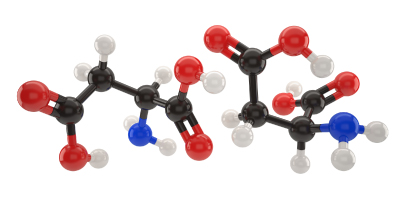
Bond Enthalpy Introduction In order to understand why breaking bonds requires energy (endothermic) and making bonds releases energy (exothermic), one must first understand the nature of a chemical bond and why it occurs in the first place. Remember that bonds are due to the exchange or sharing of electrons between atoms. Forming bonds is a…
Enthalpy change For a reaction Bonds Know that Breaking bonds always requires energy (never releases energy) Forming bonds always releases energy (never requires energy) Exothermic and endothermic process Breaking bonds is always an endothermic process (whether breaking single, double or triple bonds). Forming bonds is an exothermic process (whether making single, double or triple bonds). However,…
Given the following reaction, sketch a reaction coordinate graph. The reaction involves two steps, step 1 is the slowest step and step 2 is the fastest step. Indicate on the diagram the overall enthalpy change of the reaction, the reaction for the transitions states and intermediate states.
H2(g) + 2ICl(g) –> 2HCl(g) + I2(g)

Examples of polyatomic ions Generally, polyatomic ions have suffixes that end in “ite” or “ate” if they contain oxygen atoms. chloride hypochlorite chlorite chlorate perchlorate Note: Chloride shown above is not a polyatomic ion, it’s a monoatomic ion consisting of only one atom. Examples of other polyatomic ions: Oxyanions Oxyanions are ions that contain…
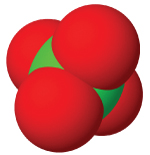
What are polyatomic ions? Ions are formed when neutral atoms gain or lose electrons. Similarly, a polyatomic ion is formed when a neutral molecule gains or loses electrons. A polyatomic ion is a charged group of atoms covalently bonded together. Majority of the polyatomic ions are anions, meaning they are negatively charged. Ammonium is the…